

The core of Universal Science design and production activities is represented byLED modules, marked with the registered trademark REDMADE.
But what are LED modules and how do they work? What are their main areas of use?
In the article we will try to provide a general overview of this product, which is so popular in the world of LED lighting, but equally prone to confusion when trying to give it an unambiguous definition.
Table of Contents
Let's start from the beginning: what is an LED?
As much as they are used in many situations and areas today, not everyone knows what we are referring to when we talk about LEDs (an acronym for Light-Emitting Diode). It is worth starting, then, with a basic definition of the product that was born in 1962 from the ingenuity of Nick Holonyak Jr. and that in 2014 allowed two researchers specializing in the study of blue-light LEDs to be awarded the Nobel Prize in Physics.
LEDs (or LED chips) are nothing more than devices created from semiconductor metals that produce photons by spontaneous remission when passed through by an electric current. The most important LED developments date back to the 1990s, when efficiency was achieved such that light emissions up to the range of white light could be designed.
In this article, in particular, we will focus on the functionality and use of modern SMD LED modules.

LED modules, what are they?
An LED module (or LED board) is nothing more than an LED device capable of acting autonomously. This means that when turned on, the module will emit light similar to that of an ordinary light bulb, but with one major advantage: it does not use electricity. In contrast to a simple light bulb, in fact, an LED module has no conducting filaments: thus, not only can it resist shocks more, but it is also functional for portable devices. In addition, the light emitted by an LED module can take on any kind of color, so the range of use is much broader.
Most importantly, at the present time, it is important to recognize theecological usefulness of the LED, as the module is designed to absorb less energy than a traditional lamp and can last longer, greatly lowering the costs devoted to maintenance.

The production of LED modules: the SMD technology
The acronym SMD (Surface Mount Device) denotes a particular surface mount technology of LED modules. What does it mean in terms of workmanship and fabrication? Simply, that LEDs are mounted on the side of a printed circuit board (PCB) by soldering without drilling holes in the circuit in any way.
Thus, the special feature of SMD modules is the assembly technology, and the advantages of this type of soldering are many:
- Greater integration and compactness of the light source;
- Reducing the time of the production process and the costs associated with it;
- greater solidity of the product, which gains in handling and compactness.
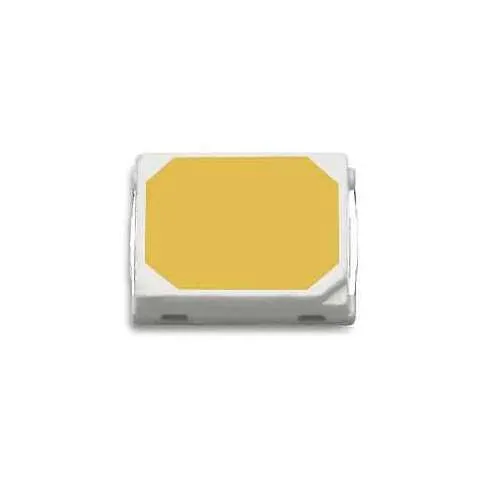
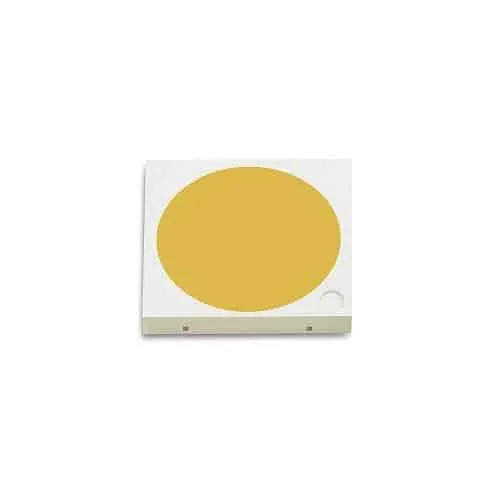
To distinguish between various types of SMD LEDs, it is necessary to juggle their numerical abbreviations, which indicate size and luminous capacity. The most popular model is definitely the 2835, while the most efficient is the 5050.
Lighting and beyond: the fields of use
LED technology has always been used mainly fortraditional indoor and outdoorlighting, and often the practical application of LED modules is limited compared to the actual potential of this technology, which is increasingly opening up to special applications including horticulture, automotive, and UV.
There are numerous shapes and sizes of LED modules available on the market. Companies often focus on creating customized, tailor-made solutions that meet the main needs of their customers: the size, shape, and color of LED modules can be molded to satisfy every type of requirement. The online catalog dedicated to the Italian brand REDMADE features standard LED data sheets, which can be filtered by size and power supply type, allowing for informed and innovative use of light sources and opening the door to direct contact with REDMADE's technical office.

REDMADE brand LED modules
Our company has specialized for years in the development and production of LED modules for every application. In 2018, we launched a new brand: REDMADE, which best identifies the design and manufacture of LED modules at our Italian headquarters in Pregnana Milanese (MI), using the most advanced assembly technologies.
The development and growth of the Italian brand REDMADE has been made possible thanks to the expansion, over the years, of the production plant, offices, and specialized personnel, as well as the creation of an in-house laboratory equipped with all the most innovative instruments.
All LED modules are 100% tested both visually and functionally, ensuring traceability to materials and perfect assonance with customer expectations.